The PWA is in Alacati, Turkey for 6 days of slalom racing for both men and women. Competition runs from August 27 - September 1. No wind on the first day. Alacati current time zone offset: UTC/GMT +3 hr. That is EDT +7 hr. Live Player below:
The next PWA event is the Kia Cold Hawaii Wave Contest set for September 17 - 23.
The AWT has concluded the August 17 - 26 Pacasmayo Classic Event from Peru. Russ Faurot reported: "Athletes who started waves near the point definitely had an advantage, and those who were familiar with the spot were well aware of this. Some of the longer waves saw 15 or 20 turns. Aerials and solid turns were bringing in high scores with the riders using a mix of skills to rake in the points. Wave selection was key as the wind was light. Catching the wrong wave meant the sailors would be well down wind, and have a long slow slog back upwind to the point. Riders gaining the most points were those who chose their waves wisely, and stayed in the critical section of the wave. It’s very easy here to outrun the main breaking section in search of a bigger chunkier section downwind where you can boost an aerial. That strategy didn’t always work well, as the waves sometimes just faded out, and the sailors were left having missed the opportunity of milking the wave further upwind."
Next up for the AWT is the Hatteras Wave Jam set to run from Septembe 12 - 15. "Cape Hatteras, NC is the US East Coast premier wavesailing destination. The chain of barrier islands off the North Carolina coast provide the perfect playground to find ideal side-off wavesailing given the predominant NE/SW wind directions. Coupled with long period swell generated during the annual Hurricane season, Cape Hatteras is the wave magnet for world class conditions during the prime tropical wave season." Bill Bell reports: "Regarding the AWT Hatteras Wave Jam, Topical Outlook is on track for incoming swell and low
tide is on our side riding in the afternoon hours during event week!
Gonna be FUN!"
The American Windsurfing Tour reported: "On day five of the 2012 Quatro Desert Showdown the best swell showed up for the week long event, and head judge Matt Pritchard made the call to send out the pros. Despite the light wind conditions they put on a spectacular show picking off logo high set waves at the Punta San Carlos point and riding the 6-to-12 bottom-turn waves through the Chili Bowl and beyond...
It was a great week hosted by SoloSports Adventure Holidays in Punta San Carlos, Baja, Mexico. Thanks to everyone—hosts, sponsors, competitors, staff, and organizer Sam Bittner—for making this event almost twice as big as it was last year. Looking forward to seeing everyone down in Baja again next year!"
Kevin Pritchard's brilliant video report:
Team Quatro in Baja:
All 7 Pro Heats can be viewed on the player below. At the end of the first heat you can select any of the remaining 6 heats to watch.
Solo Sports, the Desert Showdown event site, is remote which is part of its charm. Being remote also means limited internet access time because they have to uplink via satellite which is quite expensive. While the AWT did manage to keep us informed, there was a flood of reports after the participants made it back to easy internet access on the other side of the border.
The busy AWT now prepares for their next event in Pacasmayo, Peru, set to run from August 17 - 26. Watch the video for an introduction to this famous wave venue:
RS:X Gold Medalist Dorian Rijsselberge celebrated with a loud and enthusiastic Dutch crowd of 6,000 in the Holland Heineken House at
Alexandra Palace in London as he crowd surfed to the bar.
The 2012 London Games were a very successful demonstration of the RS:X Class in action. As the sun begins to set for this Olympiad, the kerfuffle, aka the Appeal to Return Olympic Windsufing, is getting ready to turn into an old fashioned street fight. Both sides have lawyered up and await their day in court. In conjunction with their recent Press Release, where the RS:X Class claimed the need for Judicial Review, they now have enumerated in detail support for the claim. A Briefing Document details their 16 points of why the RS:X class should be selected for the 2016 Rio Games. This document makes the claim of world wide support by citing the Petition to keep windsurfing as an Olympic discipline. Help the cause by signing the Petition which is now just a few hundred votes short of 30,000.
Boards Magazinereported: "At the Olympics, just before the medal racers took to the water, Neil Pryde sat down with the media to talk about RS:X and the future of windsurf racing." He talked about the need to improve and evolve the RS:X Class equipment. Pryde said: "I’ve made it clear to ISAF that we’re going to continue supporting it. We have a huge financial commitment, we’ve supplied all of this equipment here at the Games totally free of charge, we have half a million euro tied up in equipment at the Olympics. Plus we have another half a million euro for all the equipment we supply at the youth worlds, which was just recently completed in Dublin...I believe in the future of windsurfing so we’ve promised ISAF that at least for the next two years we will go on supplying the equipment for the youth worlds because we believe in them." He also talked about the new RS One feeder class, kitesurfing, the decision that removed windsurfing from the Olympics and the recent legal action by the Class.
The sailing press is back on the story. A recent Sail Worldarticle by leading international sailing journalist Bob Fisher questioned the ISAF Council decision "to replace Windsurfing for Men and Women with Kiteboarding for both
genders, by a single vote majority. The back-tracking has been amusing, or would have been if it had not been such a
blatant tissue of untruths. Who on earth would believe that a Councillor of ISAF
could be confused about the voting to the extent that he gave his vote to the
Kiteboards when he really wanted to vote for the retention of the Windsurfers?
These are meant to be the custodians of our sport, but their record would
disqualify them from running a charity shop."
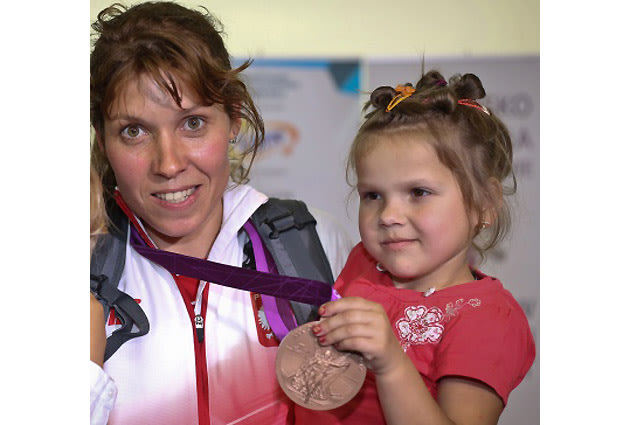
The Olympic story that's sure to open hearts is Zofia Klepacka's announcement to auction her just won Bronze Medal in the RS:X Class to raise money for a 5-year-old girl with cystic fibrosis. Her young neighbor,"Zuzia requires constant care, and that care has proven to be a financial challenge to her family." Klepacka vowed that if she won a medal, she would auction it to help raise funds for little Zuzia's support. Her disease is terminal.
Thank You to all the teachers, instructors and everyone else who helps get their message to us wannabe better windsurfers !!! Here's some of what has been shared this year.
Matt Pritchard, after completing 2 of the 3 planned for this year Baja wave clinics and spending many hours in the judging tower on the AWT, had something to share. Here's part of a recent wave sailing tips post from his blog : "What did we learn? Wave Selection - Just because you are coming in doesn’t mean you should! LOOK at what is behind you and pay attention to set waves. Watch and follow the good guys that are catching waves. Rig Separation - keep the sail further away from you so that it can pull you through the turns. When you choke the sail and have your arms bent you lose the input from the sail driving the board. Hand Movement is a big Key- Backhand back in the bottom turn, slide it forward coming off the top as you twist your body and redirect your path.
Body follows head - when coming off the top, look back to the beach to where you want to go so that your body twists in the hips while you weight your heels and pull down on the booms to keep mast foot pressure and your speed going.
Knees - get 'em low and move your body like a surfer. This helps pump the board and keep your speed going down the line. Straight legs=braking! The more speed you have on the wave, the easier it is to turn and look like a pro! Speed is your friend."
Boardseeker and Boards provide a steady stream of how to help. Some of the instruction they have published in the last few months: The 3 part series: The Right Stuff For Radical Action by Robby Swift takes the reader from the basic jump all the way through every rotating maneuver you see the pros doing: Part 1 ~ Part 2 ~ Part 3. Jem Hall helps with the Carve Jibe. John Skye wants to help you make it out to the waves. James Cox, Chris Murray and John Skye want to help you with the forward loop. Ant Baker shows how a heli-tack is done. Phil Richards shows how to do the body drag, vulcan and spock. Danielle Lucas walks us through the Duck Jibe.
RS:X competition concludes with the Medal Races on Tuesday, August 7. NBC brought us a dedicated internet based live stream view for all of Olympic Sailing. Each class had their one day in the spotlight of a complete professional TV sports production. All the bells and whistles including overhead aerial shots, on the water moving camera work, graphic interface to keep us aware of the leaders. The only thing missing was the play by play announcer and a color commentator to explain the race as it unfolded. I guess NBC had a budget after all. True to form, NBC is in masterful control of all its content; but they do share. Have a look (go full screen): RS:X Men Race 3 & 4 ~ RS:X Women Race 7 & 8 ~ RS:X Men & Women Medal Races. BTW, check out how the above racers use their uphaul line.
Will the London Games be the last dance for Olympic windsurfing? Maybe. The RS:X Class reported: "The opinion of our legal team is that the decision (to replace windsurfing at the 2016 Olympics) was perverse and unfair and so we issued a claim on August 1st 2012 in the High Court in London for the decision to be judicially reviewed. This is based on a number of assertions including a failure by ISAF to have full regard to the designated criteria for the selection of Olympic classes and to ignore a previous decision that a full evaluation would be carried out on both the RS:X and kiteboard."
The gloves have come off. ISAF responded: "ISAF intends to fully defend the decision of the ISAF Council, which was made in accordance with the ISAF Regulations and the defined decision making processes of ISAF. ISAF expects the normal submission process to be used in order to ask Council to reconsider its decisions and therefore ISAF is extremely disappointed that this course of action has been taken, not least because responding to legal claims will incur substantial and unnecessary legal costs for ISAF and for the Class itself."
Expect some fireworks at the ISAF Annual Meeting in Dun Laoghaire, Dublin, Ireland, November 1 - 11 when the Council will reconsider the decision to eliminate windsurfing. Meanwhile, the Petition to reinstate windsurfing as an Olympic Sport continues to collect more names.
Windsurfing defended· "The Last Word weighed the perennial political question: which is more elitist — windsurfing or dancing horses? It all started with FOX News conservative Charles Krauthammer, who took swipes at Mitt Romney for committing the political sin of sending his very expensive horse to the London Olympics. But one thing he thinks is still more elitist? John Kerry windsurfing. MSNBC's Lawrence O'Donnell dissected the folly in that logic in the latest Rewrite."
But on the other hand: "The Pryde Group, one of the world's biggest players in the marine and adventure
sports markets, is proud to announce a partnership with Jaguar Cars and the
all-new Jaguar XF Sportbrake. Jaguar will appear on sails, boards, buoys and rider lycras with local market
activating the sponsorship in their respective countries.
This partnership will allow the Jaguar NeilPryde Racing Series to enter
another level in terms of support, presence and exposure. With successful events
already completed utilizing the new RS:One board and featured in the Extreme
Sailing Series, the remaining events in Cardiff, Trapani, Nice and Rio promise
to provide some exciting and eye-catching spectacles both on and off the water...Mr. Neil Pryde, Pryde Group Managing Director commented: The Jaguar brand
represents a leading global brand focused on luxury, lifestyle and performance,
their investment with the NeilPryde Racing Series and our successful
collaborations to date represent not only a boost to the tour itself but also
windsurfing in general."
Julythis year was an outstanding month for seabreezes here in east central Florida. I sailed almost every day with either a 6.7 Maui Sails Ghost or a 6.1 Legend on a 2012 RRD 116 FSW. Weighing in at 162lbs. and being a well practiced early planer helped me make the average 12 to 18 knot conditions more doable. I'm also an avid follower of the local NOAA Forecast Discussion, updated 4 times daily. With their guidance and a neurotic bird dogging of my select stable of wind sensors, I was able to successfully time the onset of planing conditions at my local launch, catching a session almost everyday in July. On a few days, rapidly developing thunderstorms robbed the wind and made it too lightning dangerous to continue sailing. But overall it was a full month of windsurfing. July was hotter than normal pretty much everywhere in the US, so staying at home and air conditioned until right before sailing helped. July also brought the cold water upwelling with water temps in the low 70's (Sebastian Inlet recorded some mid 60's water temps). From the near shore cool Atlantic Ocean water to the middle of the Florida peninsula with low to mid 90's air temps, we had an above average thermal gradient: a significant factor for developing good sea breezes.
The ridge axis was a term used in almost every forecast discussion in July. I asked Dr. Steven Lazarus from the Department of Marine and Environmental Systems at FIT and Scott Spratt from the NOAA Field office in Melbourne, FL a few questions about it:
Where would I find the current position of the ridge axis?
Dr. Lazarus: Check out the Ocean Prediction Center for surface pressure/ridge axis. You can zoom in by clicking on the image - it is really nice...the nice thing about this site is that it lets you see the entire surface ridge over the Atlantic basin and click and zoom.
Spratt: The Surface Wind/Pressure Map from our Real-time mesoscale analyses page is the best place to find the current location of the surface ridge axis. To determine the likely position of the axis in the future up to the next 36 hours, you can look at our local model Forecast. Look here for a higher resolution of the next 18 hours Forecast. The ridge axis (when present) is represented by the zone or elongation of greatest anticyclonic (clockwise) curvature extending from a high pressure center. There are times that a ridge axis will not be present over the peninsula due to an area of disturbed weather (as has been the case over the past several days of early August), or if the ridge is well to the north, an onshore flow will prevail across the entire peninsula, or if the ridge is well to the south, an offshore flow will prevail across the entire peninsula.
The ridge axis feature is important to the sea breeze. How does its location affect: onset and strength.
Dr. Lazarus: The large scale ridge does affect the strength of the sea breeze which is a mesoscale phenomenon. It's intensity and position will either enhance or reduce the sea breeze. All things being equal - if the ridge axis (E-W) pushes north of our area - the easterly flow in the clockwise circulation will increase (add on to) the sea breeze generated flow. Conversely, if the axis slides south we tend to get westerly surface flow and the sea breeze can be pinned up near the coast or not even penetrate inland whatsoever if the westerly flow is strong. In the former case, the enhanced sea breeze, may be overwhelmed by the large scale easterlies and be hard to identify. This is especially the case in the fall when the surface pressure gradient increases at our latitude. Remember - the winds blow in proportion to the pressure gradient. That is where the intensity of the high comes into play.
Spratt: While there are exceptions, in a general sense, when the axis of the ridge is nearly overhead, local winds are generally light, which allows the sea breeze to form earlier and become stronger. When the ridge is to your south, the large scale wind flow will be offshore (southwest or west winds), which tends to delay development of the sea breeze and slow its migration inland. If the ridge is far enough to our south (usually over the extreme southern peninsula or the keys), the large scale wind flow can be strong enough to totally restrict sea breeze development. When the ridge axis is to your north, the large scale flow will be onshore (east or southeast winds). If the axis is near or just north of the FL/GA line, the onshore flow will often be strong (breezy/windy), and can disrupt sea breeze formation or add only marginally to it (since the onshore flow is so strong already). When the large scale onshore flow is weaker, the sea breeze can still develop and reinforce the large scale onshore flow.
How does the ridge axis effect the development of thunderstorms?
Dr. Lazarus: See my comments above - the former case (enhanced easterlies) - thunderstorms tend to be more west coast located and vice-versa for the westerly flow and northward displacement of the ridge axis (east coast located). The sort of tweener case is the ridge axis over head - ideally that suggests that the winds are primarily sea breeze generated - in this case inland thunderstorms tend to dominate. Keep in mind that this is all idealized...Once thunderstorms develop - things get complicated quickly!
Where do sea breezes originate? Are they broadly located along coastal waters offshore or is there a more localized point of development?
Spratt: The sea breeze boundary tends to initially develop very near the Atlantic beaches (due to temperature differences between the hot landmass and relatively less hot ocean waters). The boundary (onset of wind shift) then usually propagates inland during the day, with the time of development and speed of motion dependent upon the low-level ridge axis position, as described above. On rare occasions (marginally strong SW flow days), the sea breeze boundary can form along the beaches, then be pushed back out over the Atlantic. To further complicate the process locally, small temperature differences between the intracoastal rivers and adjacent landmasses also produce breeze boundaries at times near the Banana and Indian Rivers, etc. Also, as I'm sure you notice as a windsurfer, as the sea breeze circulation first begins to form, the winds become very light (as most of the air motion is vertically rising), then shortly thereafter the onshore flow kicks in and begins to build as the sea breeze boundary starts to propagate inland.
So, by knowing the location of the ridge axis, you can make some general assumptions on when the sea breeze will develop and how strong it will become. The local forecast models also typically do a pretty good job with the strength of the sea breeze (especially the higher resolution model) -- so you can take a look at them and use them to help you make a local wind forecast.
A few knots more of wind can make all the difference for us windsurfers. Is there anyway to predict the strength of a sea breeze?
Dr. Lazarus: In terms of predicting the intensity of a sea breeze circulation - there are some simple analytic models that are a function of the difference between water temperature and land temperature. So from a simple/climatological standpoint - these are good predictors. Hence, sea breeze intensity tends to peak here in early summer (May/June) and then diminishes late summer (Sept/Oct) as the ocean continues to warm while the land is cooling thereby a diminishing temperature differential. Because our summer flow here is a combo of the large scale ridge and mesoscale sea breeze - it is not a simple answer. However the high resolution models (NAM, RUC) are getting pretty close to resolving the sea breeze circulation - so I recommend looking at their output.
What is the relationship between precipitable water, the sea breeze and thunderstorms?
Spratt: Precipitable Water (PW) does not impact the sea breeze, but does have significant impacts on whether thunderstorms develop along the sea breeze boundary as it develops and shifts inland. We have a summary on our web site which describes how the location of the ridge axis determines the prevailing wind flow (this is the large scale component of the wind, NOT taking into account local sea breezes). The prevailing wind flow also dictates the lightning storm coverage pattern for the day. The lightning storm pattern assumes "average" PW values for the given prevailing wind flow. If the PW on an individual day is higher than "average", there likely will be a greater coverage of storms, whereas a lower than "average" PW likely would mean a lower coverage of storms. Check out this web page on Lightning Threat.
Any more help for us wind junkies with anything about the sea breeze?
The American Windsurfing Tour is helping focus a national spotlight on competitive windsurfing in North America. Their helping hands reached out and saved the annual US Windsurfing National Championship event which had been cancelled at the last minute. With broad industry support, the AWT has now truly defined itself as a show case for all the unique disciplines of windsurfing: wave sailing, racing and freestyle. I've always liked the the name of this organization and with the recent success of the Nationals in Hood River, their name makes even more sense. The umbrella has been opened. They are now a truly American Windsurfing Tour.
US Windsurfing National Championship Rewind· Event Site, Hood River, Oregon - Phil McGain won the 2012 US National Championship in Course Racing (Formula) and Slalom. Wyatt Miller won the Freestyle Title. Photos from every day are found here. Daily reports below include videos.
If you visit the AWT website wanting to catch up on a multiple day event, go to the RSS Feed to find what you're missing. Event reporting and ultimately its promotional impact for the sport and the Tour is what makes the AWT so outstanding as an organization. Just as the PWA has learned, reporting your event is massively important for nurturing the success of future events.
The Formula North American Championship was held in San Francisco with 23 competitors who finished the competition just the day before the US Nationals began. Brazilian Wilhelm Shurmann won the Championship. This event shared the stage with the Kite Racing North American Championship. For most of the reporting, including daily video summaries go to thispage. And for more day by day detailed race reports, go to Steve Bodner's Blog here.
The Maui Race Series wrapped up for the year with the Neil Pryde Hawaii State Championship. Buzianis won the final contest of the 5 race series. And yes, Phil McGain, after winning the US Nationals, made the starting line on Saturday, July 28 at Kanaha Beach Park. Seems covering ground is a McGain speciality in more ways than one. Maui Newsreported: "McGain also was a little tired from a week of racing and airline travel. He won national titles in Formula racing and slalom at the U.S. Windsurfing National Championships in Hood River, Ore., that ended on Thursday. 'I was pretty pleased, I sailed well all week,' McGain said. 'I made very few mistakes.' In 12 races at the nationals, McGain didn't fall once. But he crashed in that third heat of the Pro A division. 'It was a lapse of concentration,' McGain said. 'My mind and body are a little bit tired. I was so focused on the nationals, it was hard to focus today. Micah sailed very well. But I like to think I gave him a run for his money.' " Harry Wiewel Photos ~ Jimmie Hepp Photos
With the US Nationals out of the way, the AWT is now down in Punta San Carlos, Baja at Solo Sports running the Quatro Desert Showdown.
Olympic Live Streaming is available from NBC. Yes, they are covering RS:X racing which starts on Tuesday, July 31, 7:00 am EDT (noon UK time - 5 hours earlier than the US east coast). I watched the first part of the Finn Class Race 1 Monday night. The quality of the broadcast is stunning, just as you'd expect if it was on TV. There is no commentary. Now the hard part. Go here http://www.nbcolympics.com/liveextra/ and answer their questions about your account with your cable provider. If you want to watch the live broadcast or the replays, you will have to prove it is your account by submitting your account name and password. Yikes, kinda scary, huh?
Sarah Quita Offringa is the reigning PWA Women's Freestyle and Slalom World Champion. She plans to compete in only 2 events this year which means there is no chance she can defend her World Titles. (However, if she wins the freestyle event at Fuerte and they can't consummate the event in Vietnam, she could win the World Freestyle Title because this year there are only 2 events left to determine the world champion.) SQ said, "I'm doing freestyle in Fuerte and slalom in Turkey. I needed to make a choice between studies and windsurfing. Next year will probably be the same story...I think studying was the right one to choose since I now have only one and a half years to go !!"
DaNews: Why only 2? Were your sponsors good with only 2 events?
SQ: These 2 are the only events that don’t collide with my studies. Besides that many events were cancelled as well. Yes my sponsors have been very supportive and I really am very grateful to Starboard and Maui Ultra Fins for understanding my situation and even encouraging me to pursue my studies.
Did you compete in the Aruba Hi Winds?
No I didn’t. I decided to stay in Europe this year. My semester ended on the 29th of June. I would’ve been able to make it on time, it's just that I wouldn’t be able to spend more than 10 days in Aruba as I would have to leave for competition soon after. So I wouldn’t be able to enjoy it long enough.
When does the school year end and how long is summer vacation? When do classes start in the Fall?
My last semester ended on the 29th of June. And I think I start again around the 9th of September. So a bit more than 2 months. Nice time to recover from the studies and go into my third year fully motivated again.
What university are you attending? What are you studying? When will you graduate?
I study science and innovation management at the University of Utrecht. I just completed my 2nd year of my bachelor and technically have one more year to go. But last year I decided to skip my last semester so I could compete on tour so automatically I failed my classes. This means I need at least 6 months extra to finish. If all goes well then I’ll be done by January 2014. I am planning to pursue a master’s degree after that though.
Have you added any new linguistic skills to your impressive list of languages?
Hahaha no I haven’t…. I’m getting more and more fluent in Spanish and French though so I’m happy about that. It’s definitely my goal to become fluent in these two languages besides Dutch, English and Papiamento. After that I want to pursue Portuguese and Italian and German eventually.
You chose studies over windsurfing. Was that hard to do and was it a good decision?
It wasn’t hard to make the decision. I already knew that windsurfing isn’t everything for me in the sense that I get bored really fast if I only do one thing. So by doing studies on the side I stay motivated to get on the water and because of windsurfing I can get things off my mind and relax so that afterwards I am motivated to study again.
Sticking to the decision is harder. I really enjoy what I’m studying at the moment… What’s hard is that I moved to Holland to pursue my studies. So the change of environment and having to adapt to it accordingly is the biggest challenge. No matter what I think it was a good decision as I have learned so much already which I can use in everyday life. Windsurfing has been put a little bit on a hold because of it though and to be honest… That sucks. But it’s temporary and as soon as I finish I can get on the water again!
Did you go home to Aruba after the school year ended? When will you arrive in Fuerte?
No I stayed in Europe because I wouldn’t be able to stay long enough. If I’m going back home I want to stay at least a month !! I’m currently in Fuerte. I love sailing here but every year I forget how hard the conditions actually are so the first day always requires you to get used to the strong winds in super choppy water. Once you get the hang of it, you have a lot of fun :)
As a college student in a cold country, do you get much time to windsurf?
No I don’t. I’ve tried to come to an agreement with my university where I’d be able to combine windsurfing and studies but I haven’t succeeded..So I don’t get any extra time off to pursue my windsurfing career on the side which was a tough pill to swallow. So far this year I’ve sailed twice in Holland.
After every semester I usually have a 10 day break and I have used those breaks to go to Tenerife in January and Dahab in April for a week. Those were very windy trips and I’m still excited I was able to make it to those spots.
What's it like being away from the tropical paradise of Aruba?
It’s definitely hard since I just picked up and left everything behind there. My family, the beach, the relaxed lifestyle etc. But if you hold on to all of that you won’t succeed abroad. I’ve been in Holland for almost 2 years now and I miss my island everyday, but The Netherlands definitely has its upsides and has so much to offer that I definitely don’t regret going there.
Have you done any interviews for any windsurf magazines this year? Were many surprised you wouldn't defend your world titles?
No I haven’t done any interviews I think… I never really announced I wasn’t going to defend my titles since I was convinced I could still compete and study like I did last year, but it wasn’t until February that I realized that it just was not possible. If I keep on skipping classes I would fail them and be even more delayed and right now I just want to get my studies over with as soon as possible. Besides that they’ve introduced a new rule in Holland. Every student gets one more year than needed to finish their studies. In my case I would have 4 years to finish a 3 year bachelor. As soon as it takes longer than this you get a 3000 euro fine. Sooo for the people wondering why I haven’t competed in any competitions this is why…
Anything you want to share about life and things you've learned since starting University?
Oeeff…I’ve learned so much. Don’t even know where to start. The most important thing I’ve learned is to appreciate everything I have or had, so much more. My friends and family around me who I can always count on. In February I was the happiest person on earth when the temperature went from -5 to +5 degrees Celsius. Guys like Thijs and Hugo who take me windsurfing since I don’t have a car and otherwise wouldn’t be able to get on the water. I’ve learned to be more organized (still need to be way more organized but I’m getting there!!). The list goes on and on. Really.
Also that there was no right or wrong when I decided to go to Holland. It really feels like I’m on an adventure wherein I have so many possibilities and options and I get to decide how it turns out. I have good and bad days, but it isn’t until after some time when I look back that I realize how my decisions and the people I’ve met along the way have had their influence on how my life is turning out. I don’t know how to explain it! but I am truly excited for what the future holds. :-)
Thank you, Sarah Quita for taking the time. The last 3 photos in the interview were from Texel Island, Holland. And yes that's SQ wavesailing...she said it was a lot of fun.
Catch her live from Sotavento, Fuerteventura | July 20 - 30. In fact, the PWA is planning to Live Webcast all of the remaining World Tour events.
Go Yachting's July 2012 Episode 10 featured the Olympic sailing kerfuffle: Windsurfs vs. Kiteboards. The narrative from the Neil Pryde interview:
"As the London 2012 Olympics draw near, Go Yachting sits down with Neil Pryde to talk about the recent sailing decisions made for the 2016 Olympics, and the ramifications. Sailing as an Olympic sport is undergoing change. Recent decisions within ISAF have caused both concern and debate. As sports around the world compete for limited medal slots, what does the future hold for sailing in the Olympics?
Neil Pryde have been supporting and investing in the Olympics for many years, providing windsurfing equipment for Barcelona 1992, Beijing 2008 and also for the current edition, London 2012, as well as supporting youth windsurfing through the ISAF Youth Sailing World Championships. Producing windsurfing equipment under the NeilPryde brand and Kitesurfing equipment under the Cabrinha brand, Neil Pryde is in a unique position to comment on the recent 'Windsurfs are out and Kiteboards are in' Olympic decision by ISAF.
For Rio 2016 Windsurfs will be replaced by Kiteboards, which will be making their Olympic debut. The decision has proven to be contentious.With a strong youth development programme, windsurfing has been responsible for bringing many developing countries into the sport of sailing. The decision to replace them in the Olympics has surprised many. Since the decision was made, a number of stories have surfaced of representatives voting against national association orders, and some even saying they were confused by the voting system. With so much on the line, how can such an important decision be made this way? What happens next? What is the future for sailing as an Olympic sport?"
Some excerpted quotes from the interview by Neil Pryde:
"Windsurfing was sacrificed to maintain the traditional yachting classes in the Olympics. That is not a very good way to make important decisions, particularly when windsurfing has done so much to bring developing countries into international yachting".
"I am not against kitesurfing - it is my most important business - but I don't think it yet belongs in the Olympics. It's premature".
"It's a tragic decision for developing countries that have started international sailing through windsurfing. China, the biggest Olympic country, came to sailing through windsurfing and this is a slap in the face."
"It was a politically engineered decision".
The 7 minute Neil Pryde interview is the first segment of the following video report.
US Windsurfing's website, Save Olympic Windsurfing, in their first week of operation, had 4,000+ views from 51 countries. The site grabbed the attention of the German based International Kiteboarding Association. Their detailed 13 page reply countered the US Windsurfing's assertions about why the ISAF decision was wrong. I thought the most interesting and funniest (obviously, something was lost in translation) counterpoint of the kite rebuttal: 7. Fiction: There is no youth pathway to kiteboarding
Would you breed your kids in a AC 45 or even in a skiff ? No, you wouldn’t…
Kite Raceboards are probably the most high performance vessels out there, and surely not something you learn to sail on. Therefore, the pathway is learning to sail and to windsurf.
If you're shaking your head with disbelief, yes, the IKA plan for introducing young, future Kite Racers is to teach them windsurfing first and then when they're older...
A reminder: The Petition continues to collect names for the protest to return windsurfing to the Olympics. If you haven't signed, please consider doing so.
Windsurfer International Done· Brian McDowell announced Thursday, July 12: Windsurfer International will cease production and that he will join Windsurf Magazine to become Editor and lead a new digital project for the largest English language title in the sport. Brian wrote: "We'd like to say a special and huge thanks to all the readers, advertising supporters and awesome contributors to the magazine and Beach Telegraph over the past 4 years. Without your backing there would've been no progress to this point. There will now be a wider range of content and upcoming digital formats available under the Windsurf masthead from a much bigger team - you're all in for a massive treat!"
Windsurf, the UK’s Number 1 Windsurfing Magazine and highest-circulation English language title in the sport is pleased to announce that Brian McDowell will become Editor, kicking-off with the August 2012 Edition.
As of now Windsurfer International will cease to publish and, once complete, the world’s most exciting digital resource for windsurfers will appear at Windsurf.co.uk
According to McDowell, who brings an audience of over 180,000 Absolute Unique Readers from 185+countries making more than 2.5 Million page views annually, the partnership will bring significant benefits to readers and advertisers alike.
Windsurf is published 10-times annually (Monthly March–October, Nov/Dec and Jan/Feb).
Kai Lenny· After a failed first attempt 2 years ago, watersport master Kai Lenny attempts to windsurf 56 miles across Lake Michigan. Better equipment, a better forecast, and a different location set the stage for his second attempt, and it all falls onto Kai to power through hours of constant focus and bitter cold to pull it off. After 2 hours and 50 minutes of windsurfing through endless choppy waves, Kai emerges triumphant on the other side of the lake. Connect with Kai on Facebook.
CGWA Windfest Video Reports by Adam Wojtkowiak (thanks Windsport for posting these videos). Windfest Photos by Gorge Windsurfing.
MNA (Member National Authority) is the fancy name for a country in ISAF vernacular.
Save Olympic Windsurfing· With only weeks before the start of the 2012 Olympics, US Windsurfing's President, Karen Marriott, sent US Sailing a letter which said, in part: "As you know, the windsurfing community here in the United States (and around the world) has been quite upset by the May ISAF vote that replaced windsurfing with kiteboard racing in the 2016 Olympic Games...We feel this vote was taken with faulty information and, in fact, the vote itself is invalid and a new vote should be taken at the November ISAF meeting, if not before...We look forward to answering any further questions at our upcoming (still to be scheduled) conference call. On behalf of all windsurfers in the United States, the US Windsurfing Association would like to thank you for the opportunity to provide you with this information and for your thoughtful consideration of this very important issue."
In the letter, US Windsurfing urges US Sailing to look at their new website: Save Olympic Windsurfing. The website is a tour de force, rebutting the rationale for replacing windsurfing with kite racing at the 2016 Olympics in Brazil. Contributors to the site include Jerome Samson, Nevin Sayre, Platt Johnson, Doug Waldo and Karen Marriott. Adding to the urgency of the protest is this assertion from the website: "We believe that this decision was misguided, and respectfully appeal to US Sailing to examine the facts and reconsider its position. If a formal request can be assembled and submitted by August 1, 2012, the ISAF Council will revisit the issue at its Annual Meeting in Dún Laoghaire in November 2012."
Tenerife· In the waning minutes of the live webcast from Pozo, Ben Proffitt confirmed that the live video coverage would continue at the next PWA event set to run July 12 - 18. Lively commentary and interviews give these webcasts the same feel we expect from mainstream TV sports coverage. My favorite interview moments: I learned that 34 year old multiple World Champion Iballa Moreno started windsurfing at 17 and turned pro three years later. And, Phillip Koster has a secret for his super fast and amazingly consistent double forwards: with your back hand reach all the way back and grip the boom's adjustable tail piece. He warned that he does sometimes cut his hand on the adjustment holes of the tail piece. Congratulations to Ben and the PWA for their outstanding work in bringing the World Tour to all of us diehard fans.
The embedded video player will activate when the broadcast goes live from the Wave Contest in Tenerife. In the meantime you can watch last week's daily video summaries from Pozo by clicking: Newest.
Practice Safe Windsurfing· Equipment failure is rarely anticipated. Spontaneous mast breakage, when it happens on land, is a weird blessing. When your mast breaks offshore, no matter how far off, it's a freak out. That ol' sage advice, don't sail any further offshore than you're willing to swim back, is worth taking to heart. Booms break too. When that happens, you hope the arm that broke is not the one you need to get back to shore. And that's right, you can sail with only one boom arm. You also might hit something in the water and lose a fin. Or worse, while sailing at max speed, run aground. The resulting sudden stop can cause the rider to be violently catapulted which may completely disintegrate the board and some or all of the rig above it. Equipment fails. Booms and masts are hard to survey for imminent trouble. Sometimes you're just going to be unlucky, and no amount of prior, proper planning is going to help.
Just a week ago, 3 of my mast bases failed in a period of 45 minutes. The first one broke about a half mile from shore; I got back without incident. Changed out the broken base with another one, repeated the run a half mile from shore and it also failed mid jibe. Again, I returned to shore without incident, replaced the broken mast base with yet another one and it too broke. What failed? It was the flexible urethane tendon in the mast base assembly. All 3 broke where the tendons had been drilled.
The mast base must be disassembled and the tendon inspected periodically. How often? At least once a year. Chinook's team riders replace their tendons once every year. Why do tendons fail? In short, the tendon loses its ability to flex properly. Sometimes they begin to show fine cracks in the area which you can see, but more commonly, cracks propagate from the drilled holes in the tendon. When you disassemble to inspect and see a crack running away from the drilled hole, replace the tendon. All 3 of the mast base companies (Chinook, Epic Gear, Streamlined ) I contacted talked about reasons that might effect the longevity of a tendon. All 3 mentioned heat and humidity as possible culprits for shortening the life span of your tendon. Humidity, we can't do anything about as windsurfing mostly occurs in water environments. Heat might be something to think about. I store all my gear in a SUV all the time. In Florida and anywhere there is decent solar radiation, temperatures inside a vehicle get pretty dang hot even when outside air temps are modestly cool.
Every mast base manufacturer uses a different formula for their urethane tendon that balances strength, flexibility and UV inhibition (color). They all, as expected, tout their unique product. And most likely, all will work well if you follow some simple regular inspection or replacement on a timed interval of your mast base tendon.
What about rubber hourglass mast bases? They offer a softer feel than the tendon. Chinook suggested that perhaps rubber may last longer than urethane. While they are easier to inspect, they may be too difficult for some to replace worn parts. And over time they may cost more to use since full replacement might be required. On the other hand, tendons are relatively straight forward to replace and cost between $15-20.
Postcript· Had to do a double take when my Caller ID said NY Times. Must be a subscription robo call I thought and almost didn't answer, but what the hell..."This is Daniel Slotnick from the New York Times, do you have a few minutes for an interview about Jim Drake...I saw your blog." Daniel didn't know much about windsurfing or Jim Drake. We talked for about 40 minutes. I later learned that US Windsurfing Prez, Karen Marriott, had given the reporter my name and number. Thanks to Daniel for doing such a good job on the Jim Drake news obit and for spelling my name correctly. It was also a thrill to have DaNewsBlog linked in an article from The Grey Lady. Jim Drake, Creator of the Windsurfer, Dies at 83

 The AWT has concluded the August 17 - 26 Pacasmayo Classic Event from Peru. Russ Faurot reported: "Athletes who started waves near the point definitely had an advantage, and those who were familiar with the spot were well aware of this. Some of the longer waves saw 15 or 20 turns. Aerials and solid turns were bringing in high scores with the riders using a mix of skills to rake in the points. Wave selection was key as the wind was light. Catching the wrong wave meant the sailors would be well down wind, and have a long slow slog back upwind to the point. Riders gaining the most points were those who chose their waves wisely, and stayed in the critical section of the wave. It’s very easy here to outrun the main breaking section in search of a bigger chunkier section downwind where you can boost an aerial. That strategy didn’t always work well, as the waves sometimes just faded out, and the sailors were left having missed the opportunity of milking the wave further upwind."
 Next up for the AWT is the Hatteras Wave Jam set to run from Septembe 12 - 15. "Cape Hatteras, NC is the US East Coast premier wavesailing destination. The chain of barrier islands off the North Carolina coast provide the perfect playground to find ideal side-off wavesailing given the predominant NE/SW wind directions. Coupled with long period swell generated during the annual Hurricane season, Cape Hatteras is the wave magnet for world class conditions during the prime tropical wave season." Bill Bell reports: "Regarding the AWT Hatteras Wave Jam, Topical Outlook is on track for incoming swell and low
tide is on our side riding in the afternoon hours during event week!
Gonna be FUN!"
Next up for the AWT is the Hatteras Wave Jam set to run from Septembe 12 - 15. "Cape Hatteras, NC is the US East Coast premier wavesailing destination. The chain of barrier islands off the North Carolina coast provide the perfect playground to find ideal side-off wavesailing given the predominant NE/SW wind directions. Coupled with long period swell generated during the annual Hurricane season, Cape Hatteras is the wave magnet for world class conditions during the prime tropical wave season." Bill Bell reports: "Regarding the AWT Hatteras Wave Jam, Topical Outlook is on track for incoming swell and low
tide is on our side riding in the afternoon hours during event week!
Gonna be FUN!"